The design tools I’ve used for years are increasingly where I finish my work, rather than where I start. I still use them to refine and get the details exactly where I want them. But by the time I open those tools, I might already have built a small tool to explore an idea, directed an agent to create some movement or worked out an interaction through code.
I hadn’t planned to change my process. I had things in my head that I wanted to make and started finding different ways to make them with the help of AI. Sometimes that meant learning another tool; increasingly, it meant building one from scratch. I’m not alone in that. Figma’s 2026 AI report found that the share of designers working in code nearly doubled in a year, from 21% to 41%.
Like most designers, I was already using prototypes and working iteratively long before AI arrived. The Double Diamond hasn’t suddenly become irrelevant. What’s changing in my own practice is how much I can shape the process around an idea, including the tools and capabilities I bring into it.
I might build something to explore a particular movement, adjust its behaviour and discover that the original idea needs rethinking. I can put that experiment in front of an animator or developer, whose input sends me back with a different question. Alongside designing the outcome, I’m deciding how to get there.
More of that work feels like creative direction, and I think designers at every level are beginning to take it on.
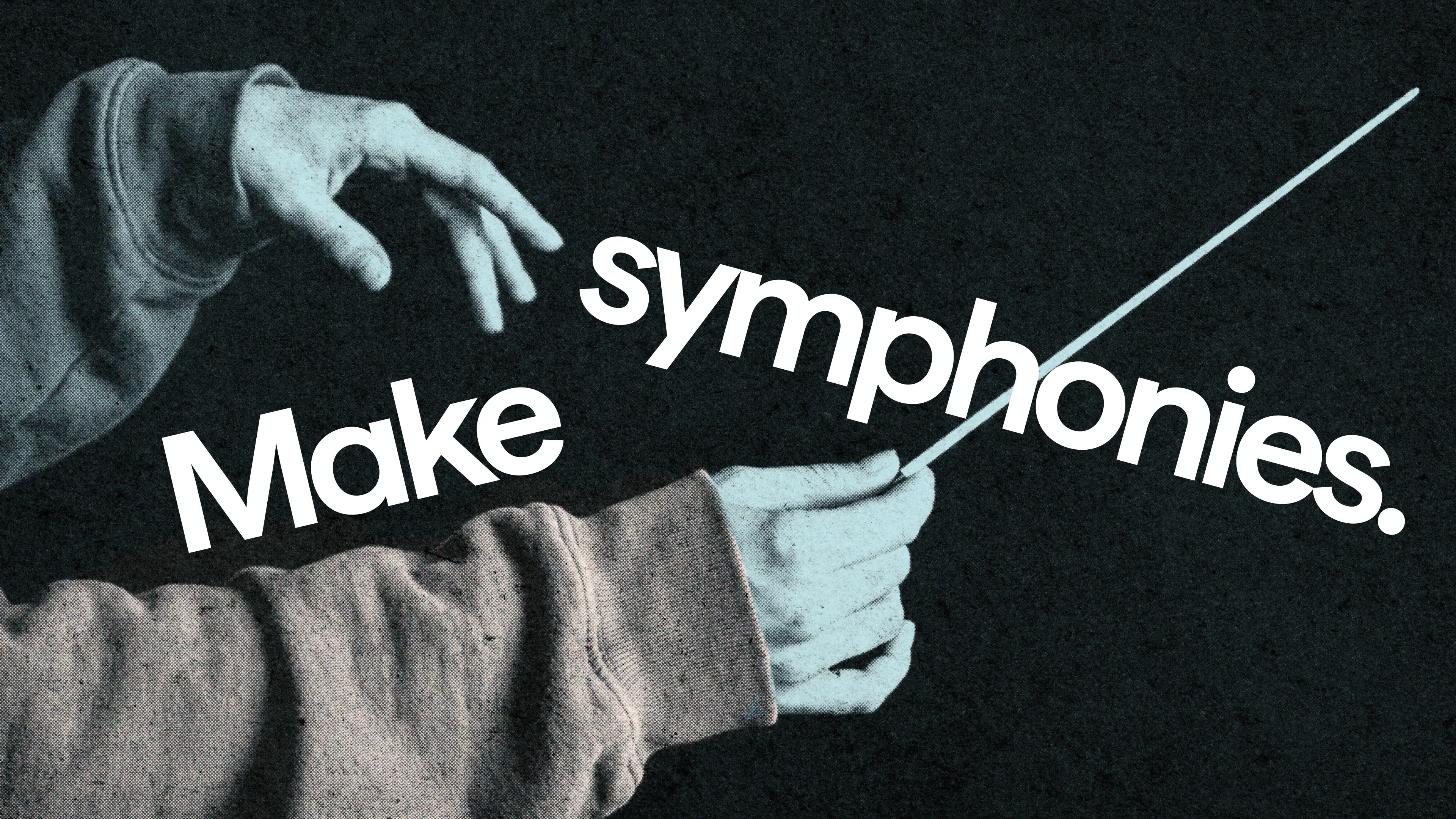
The designer as conductor.
The closest comparison I can find is a conductor. They don’t play every instrument, but they understand what each contributes and can hear how the parts relate to one another. An individual performance might be excellent and still need to be pulled back because it is overwhelming the whole.
Working with AI often feels like that. I might direct one agent to explore camera movement, another to develop kinetic typography and another to build an interaction. Each has a particular job, but I’m responsible for whether the results belong together.
A camera move can be impressive and completely wrong for the idea. Typography can be beautifully animated and difficult to read. An interaction can work exactly as requested while asking too much of the person using it. I need to recognize those problems and give direction that helps resolve them.