Intro.
“Putting the patient at the center of everything we do.”
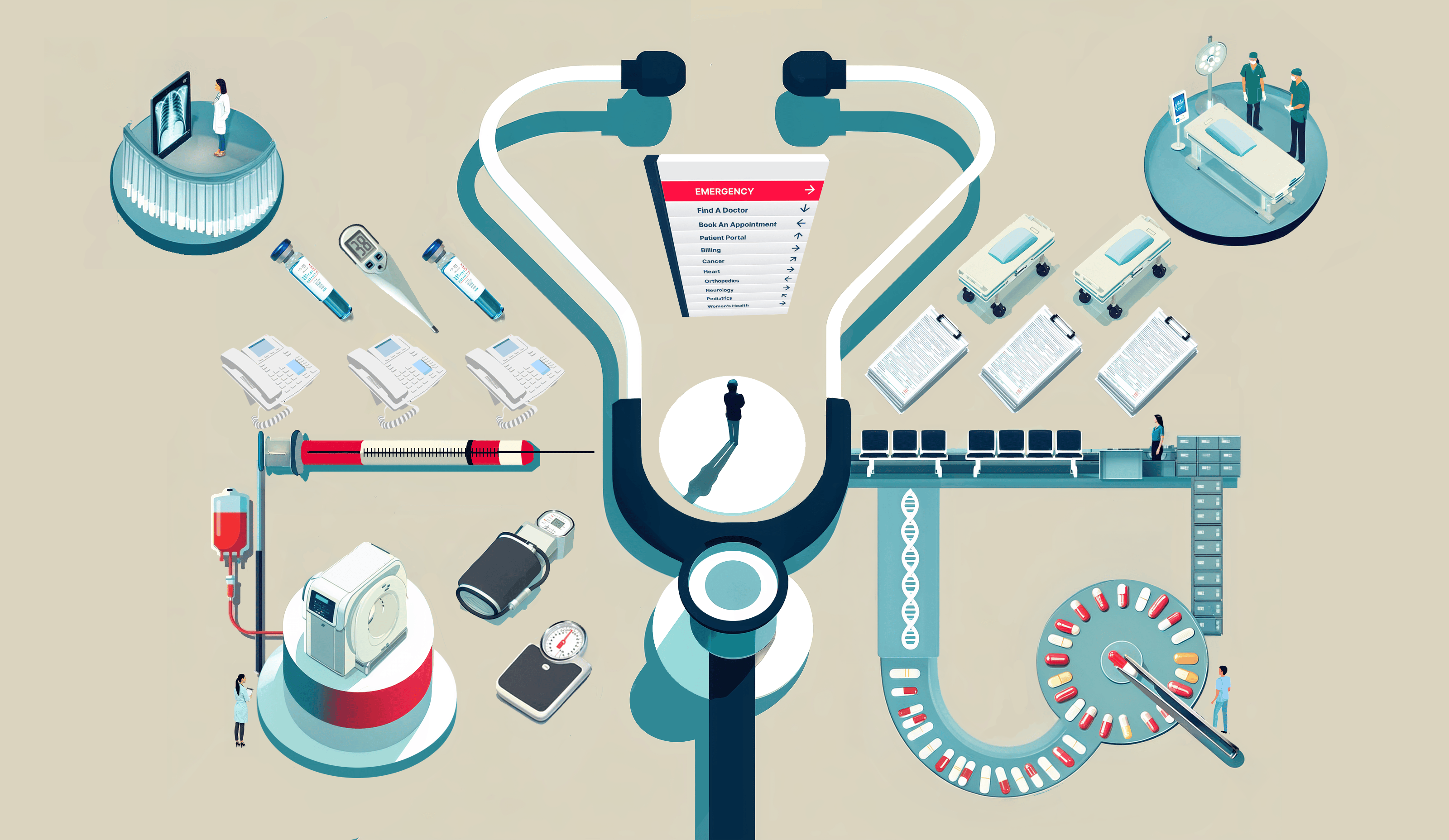
That phrase is on nearly every health system website. The aspiration is genuine. But aspiration runs into org charts, governance structures, regulatory constraints, and legacy infrastructure.
When healthcare digital platforms are redesigned, internal pressure mounts: physicians demand more visibility, leadership insists on highlighting awards and metrics, and technology teams want to know how HIPAA-compliant platforms can feasibly integrate with the new site and CMS.
These are all valid concerns. And no single constituency has both the incentive and the power to demand a better patient experience, so no one does.
Founded upon provider-centric systems.
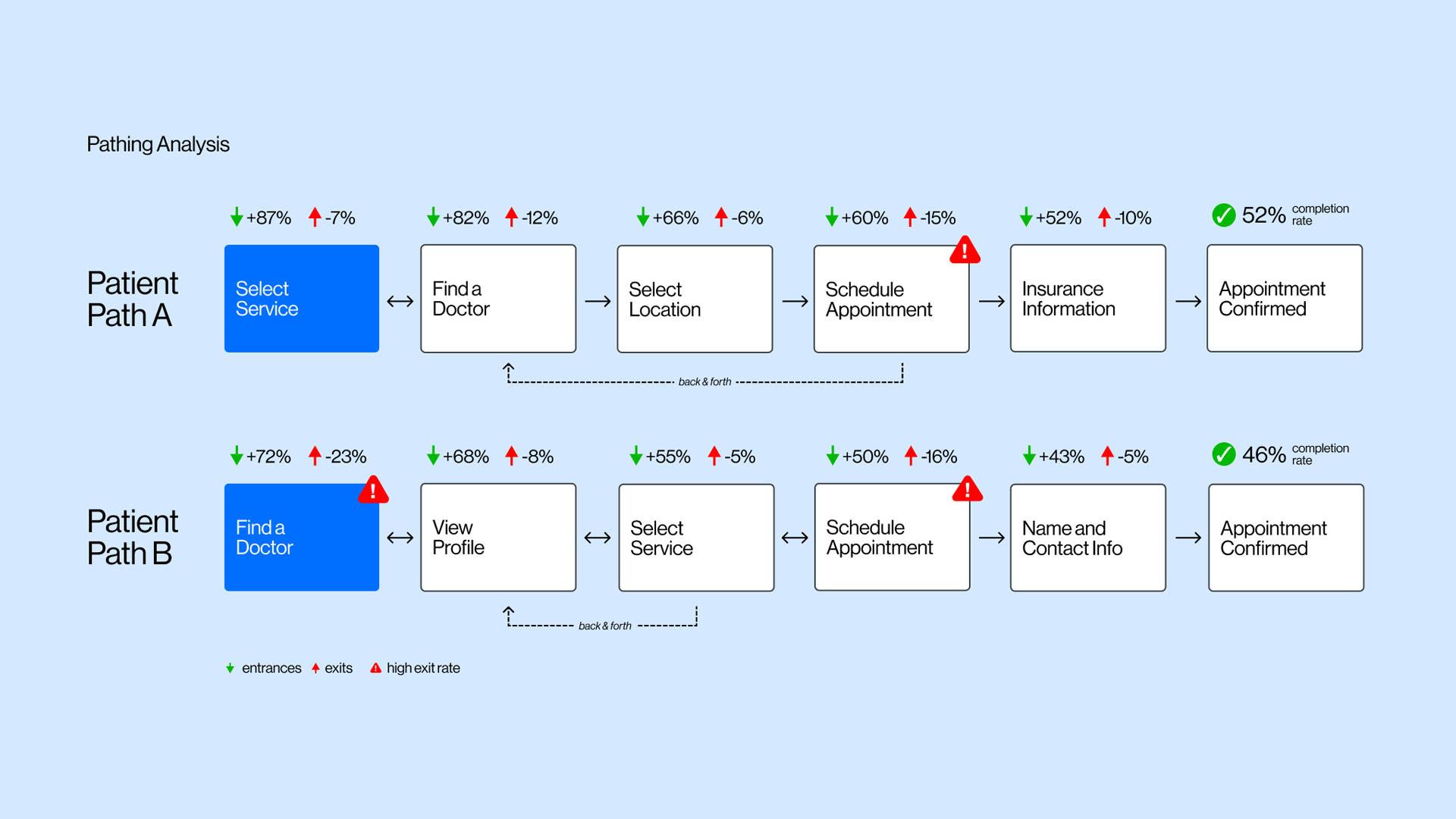
Health systems are structured around the logic of care delivery, not the experience of receiving it, and their digital experiences expose that gap. Spend five minutes browsing any major site, and a pattern emerges. The primary call to action is “Find a Doctor.” Below it, a grid of service lines: Cardiology; Orthopedics; Oncology; Neurology. Scroll further and you’ll find news items, award badges, donor campaigns, and community events. Internal politics of health systems demand it, whether it or not it serves the patient.
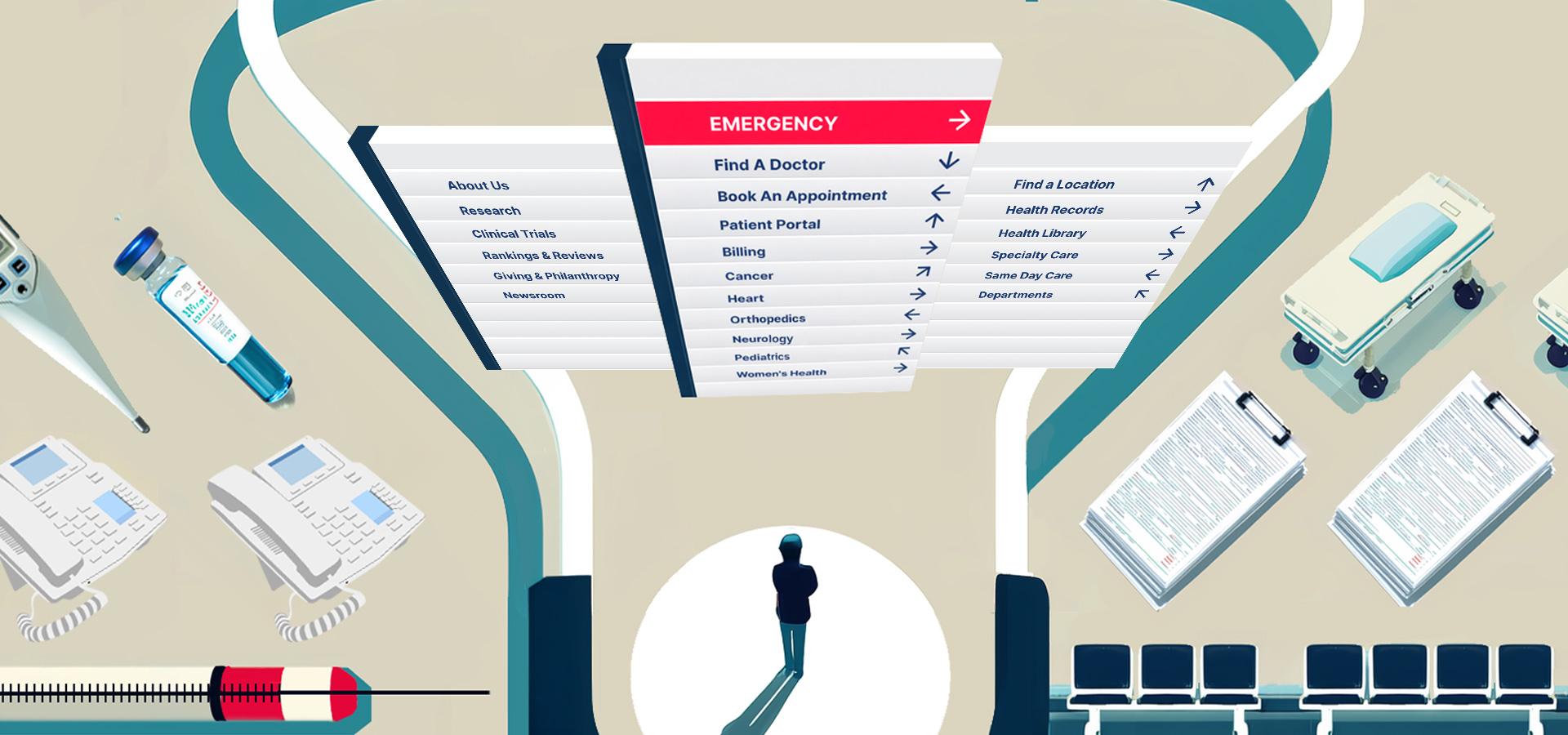
Service lines aren’t clinical categories; they’re administrative and billing units. “Find a Doctor” is prioritized because it generates a metric—physician appointments filled—that maps to revenue, even if attribution is loose and patient experience is an afterthought. Booking flows demand insurance details before surfacing care options, because they’re built to protect billing, not to help someone figure out where to go. The tools health systems have invested in were built to improve operational efficiency. The patients, where they appear at all, are a secondary consideration.