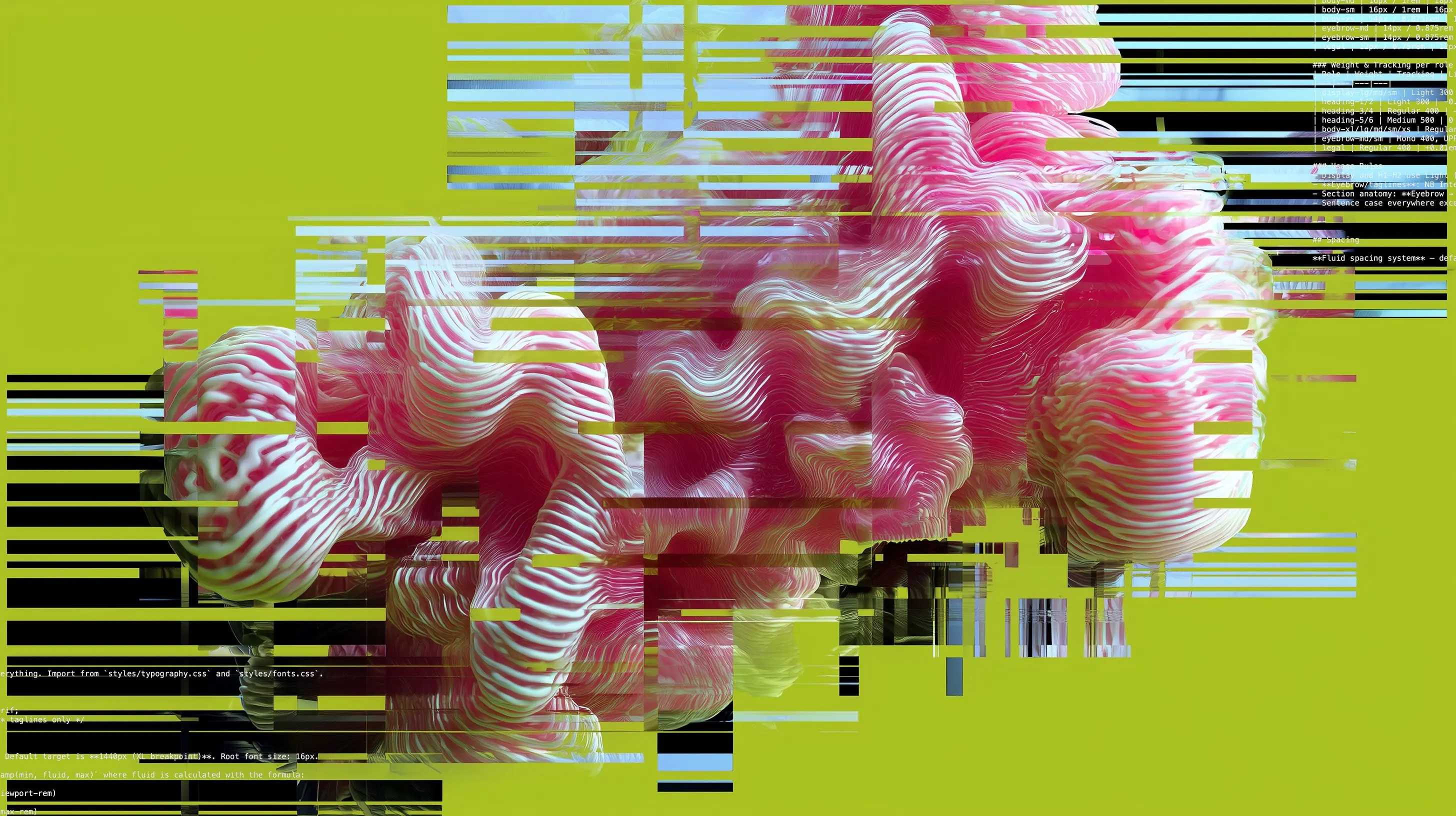
There’s a scene in Hackers—the 1995 film that probably introduced more people to the idea of digital culture than any actual computer—where a kid breaks into a system not because he knows exactly what he’ll find, but because the act of looking is the point. The curiosity is the method. The system doesn't own you if you're willing to go somewhere it didn’t expect.
I think about that energy a lot these days. Not the breaking in—but the disposition behind it. Exploratory, irreverent, genuinely thrilled by the unknown. It’s the same energy that produced some of the most vital creative work of the last thirty years. And it’s exactly what the design industry needs to rediscover right now.
Before the rules, there was chaos.
In the mid-nineties, while most of the industry was still figuring out what interactive even meant, a handful of studios and artists were already doing something else entirely.
Tomato—the collective that shaped so much of the era's most arresting visual communication, and the creative force behind Underworld's visual identity—weren't operating from a rulebook. They were treating design as a live experiment: typographic systems that felt like they were short-circuiting, imagery that refused to sit neatly between art and commerce, work that was intentionally unresolved. The Designers Republic, out of Sheffield, were building a visual language for electronic music culture that looked like corporate communication dismantled and reassembled wrong—deliberately, precisely wrong.
These weren't studios that had cracked a process. They were studios that understood something more durable: that the work happens at the edge of what you know, and you find it by going there before you're ready.
OK Computer didn't happen because someone engineered an album to define the anxiety of the late twentieth century. It happened because Radiohead deliberately abandoned conventional studios, treated uncertainty as material rather than obstacle, and let the process find the work rather than the other way around. Jonny Greenwood described it as trying to recreate brilliant records and missing. That missing—that productive failure—is the whole point. And it points to something I keep coming back to: the most generative moments in design history happened when the tools outran the rules. We are in one of those moments right now.