We’re going to take a trip down memory lane. The year is 2010 and it’s the night of March 15th. You and all your friends have been waiting in line for hours to get your hands on the brand new copy of God of War III at your favorite game store. The energy is electric, and the crowd and line are growing by the minute.
When the clock strikes midnight, the store opens. Copies of the game start being handed out. You quickly grab yours and race back to your car in order to drive home and immediately start playing it. Before you know it, your alarm goes off, as you fell asleep trying to stay up all night playing the new release.
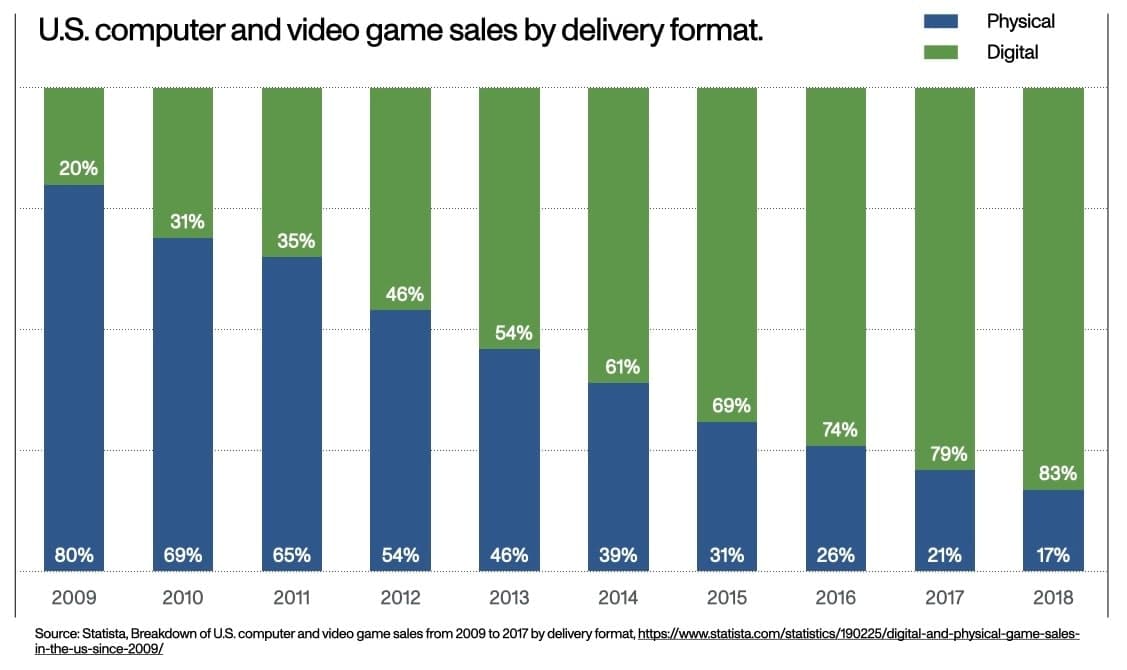
The transition from physical to digital formats.
That was the norm for avid gamers when it came to blockbuster title releases. But as technology has advanced, we’ve seen a massive shift (as the graphic below shows) from 2009 to 2018 in buying behavior, from physical to digital delivery formats.
This seismic shift from retail to e-commerce has allowed companies to create digital storefronts, which in turn has opened new revenue streams for studios within a single game.
The most visible gain for publishers has been their ability to cut out retail stores as the main source of distribution for video games. In only nine years, gaming console companies gained the ability to sell directly to consumers through their own online marketplace. And within these marketplaces, they became able to sell other games while still getting a percentage of the revenue.
The ripple effects of online marketplaces.
This shift to online marketplaces brought additional benefits for these companies. The most visible one is having more time to complete games. Before, limited to physical formats, they needed to have 100% of a game ready before putting it on the market, which in turn meant risking delays and potential damages to the customer relationship. Nowadays, they can ship a game that’s only a quarter of the way done, and complete it with a patch on release day. This also gives them the opportunity to fix bugs, along with adding new features to the game in real time in the form of downloadable content (DLC).