PPL
Makers #8: Kima Sargsyan and Tyler Kracht
For this strategy and design duo, the “design jam” provides the space to solve for the long-term. It’s here that Kima and Tyler bridge the gap for today’s shopper and the future of self-expression, ensuring that brands remain relevant across every digital touchpoint for years to come.
Interview by Jessica Strubel.
The real magic happens at the intersection of strategy and creative—a partnership that pushes a project beyond the brief. Over the last year, Design Director Tyler Kracht and Senior Experience Strategy Director Kima Sargsyan have been doing exactly that for interior paint leader Behr, focusing on the brand’s long-term evolution rather than just immediate fixes.
“We weren’t just solving for the shopper today; but how people relate to color and self-expression over the next five years,” says Kima.
The engine of this partnership is the “design jam”—a fluid, high-energy collaborative space where both teams align on everything from visual aesthetics to the overarching customer journey. By weaving the client into this fluid process, the duo has created a blueprint for how design and strategy can lead a multidisciplinary team toward a powerful outcome.
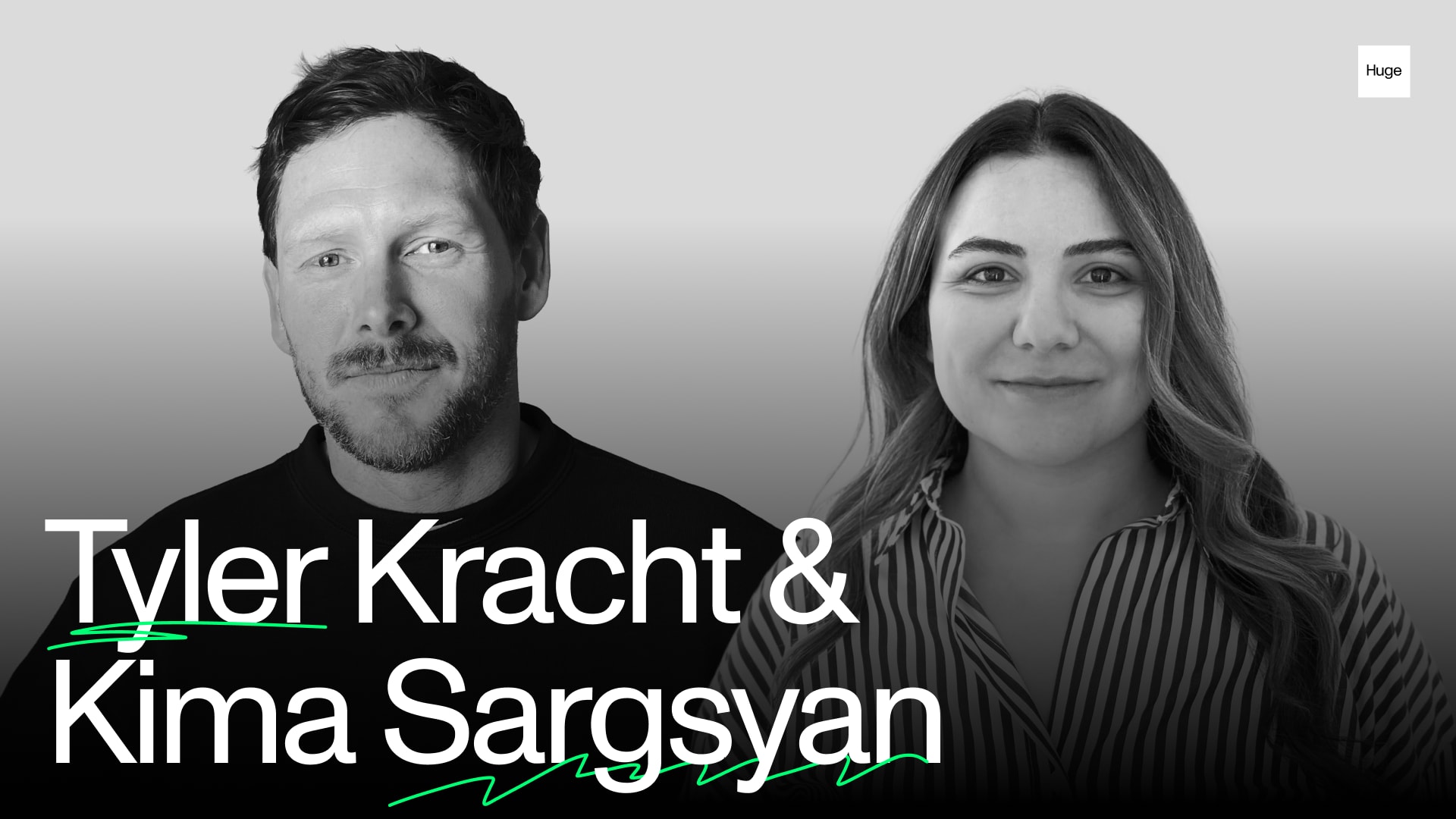
The duo.
Tyler: I’m a Design Director at Huge and have been here for four years. Ultimately, my role is the “wrapping paper on the present,” translating strategy into visual design aesthetics. I lead design with user experience to ensure that every digital avenue is exactly what the user needs. I work with lots of different clients to build digital experiences that move the needle.
Kima: I’m a Senior Experience Strategy Director. My role is to find the right direction for a digital experience, one that genuinely inspires the consumer while working hard for the business. But before any of that, my job is to establish trust and to help us get to the best creative outcome possible.
The brief.
Kima: Behr reached out to us over a year ago with a compelling brief: to redesign and reimagine Behr.com. The idea was to bring to life the brand’s promise of being an invitation for people to live more colorfully and expressively. A fresh coat of paint might sound small, but it’s transformative; it changes how a room feels and how you feel in it. The website is the front door to that experience.
What made this partnership meaningful was thinking beyond the immediate redesign. We asked: How do we build something that keeps Behr relevant long-term? We weren’t just solving for the shopper today, but how people relate to color and self-expression over the next five years—both online and in-store. In 2026, design isn’t just about solving the current problem: it’s about planning for where the brand needs to be.
Tyler: When Kima and I started the project, the first couple weeks were a constant back-and-forth jam. It’s that strategy and creative duo working in lockstep that ends up getting the client on board. Our process was built on quick iteration and alignment, making sure that the work doesn’t derail from the user’s original intent or the experience we wanted to deliver.
As Kima mentioned, we’re building a long-term experience for Behr. That requires getting to know the user deeply and then designing specifically for them. That foundation is how we plan a long-term design approach for the design and, more importantly, how we pull it off.
Behind the work.
Tyler: We’re building a website for Behr and its users, but it’s so much more than a “redesign.” It isn’t just an exercise in type hierarchy, layout or how we scroll through it. We’re designing for users who are trying to find a paint color and transform their space—whether it’s an exterior of their home, a deck or a kitchen.
Most of our users are taking on painting themselves but, for many, a DIY project can feel overwhelming. So when we think about building a website, we have to meet the user in an inspiring place—turning what could feel like a stressful task into an exciting and creative journey.
It’s about showing the client that inspiration has a job to do: it has to result in paint on the wall. That was a breakthrough moment for us—redefining the “barrier” not as the website itself, but as the user’s hesitation to start. We showed the client how deep this experience goes. It’s not just about finding a color; it’s about building the confidence to actually do the work. We’re creating a brand journey that starts with a digital search and ends with a finished room. By supporting the user from start to finish, we’re building a level of trust that ensures they’ll return to Behr for their next project. That full-circle journey is the breakthrough we’re delivering.
Kima: In recent years, there’s been a lot of conversation about curation and specifically, how much of that burden are we placing on the consumers to curate their own lifestyle or their home. Our goal was to ensure that curation didn’t feel like more “work” for the user. Finding the right color for their kitchen shouldn’t be a chore; it should be a delightful experience. We want users to feel that wherever they are in their “taste journey,” it’s enough for them to start exploring. We’re moving from a model where the user has to do all the heavy lifting to one where Behr.com explores and curates alongside them.
The strategy-creative process.
Kima: Tyler always invites the strategy team into the “design jams” early so we reach solutions together. But he doesn’t just think about work and how it looks on paper but also how to bring the client into the story.
We spent a lot of time talking about how the client is perceiving the work. Tyler is really open for me to join a call and just jam on some ideas, like the hero component for example, which is an important point of access on a website. He creates space for strategy to come in and ensure that the creative expression lands perfectly with the client.
It’s about finding a shared language. We’ve moved past individual crafts “claiming” a space; instead, we’ve created a collaborative environment where we decide together exactly how to tell the story. This eliminates the common pain point of teams pulling in different directions. It’s a best practice we’ve established here that I believe should be the blueprint for all of Huge.
Tyler: Ultimately, this partnership is built on a deep, functional trust. I never hesitate to reach out to Kima for a gut check or a fresh POV, because I know she’s as invested in the outcome as I am. In many agencies, once the strategy deck is done, the strategist moves on. Here, it’s different. Kima doesn’t just hand over a document and walk away; she’s there to provide the support and the specific “vernacular” we need to present a unified, bulletproof package to the client.
Having her in the room gives our creative work a backbone. Behr is a massive organization, and we’re often presenting to stakeholders with vastly different levels of technical knowledge, from developers and content loaders to marketing leads and the CEO.
You never know which way a client conversation will pivot or what technical questions will come your way. By partnering so closely, we ensure we have the right answers for every “cadence” of the business. Kima provides the strategic ammunition we need to speak to every stakeholder with confidence, ensuring they feel comfortable with the vision from A to Z.
Kima: For a long time, our industry relied on a rigid handoff: strategist writes the brief and creative takes it from there. The stages were clearly defined. But, with the changes that are happening in our industry (and the prominent role AI plays) the brief is no longer the most important part of our collaboration. It’s actually just the introduction. The real work has moved into the “jam sessions.” True strategy and creative work is not found in the brief, but the collaborative process of bringing the vision to life. This is the fundamental shift I’m seeing on Behr and across other accounts.
Successful partnership.
Kima: There are two very different types of success emerging from this partnership. The first is the impact on our client—tackling both the creative and business objectives of what we’ve built. We’ve established a new set of best practices, specifically around managing dual digital experiences, that we can now apply to future projects with a deep level of expertise.
The second success is more personal: the establishment of real trust and confidence within the team. I don’t think we would have a situation where we are in a room together where we would distrust an idea because it comes from another craft.
I believe disagreement is a healthy place for creative and strategy partners to be because it means we are getting somewhere. That tension is where the best solutions are found. Tyler and I have developed a specific work ethic and level of trust that we’ll carry into every project that follows. Every strategy and creative duo is very different, but we’ve figured out our style that works.
Tyler: For me, success starts with showing up with the right attitude, regardless of the hardships. When you’re managing a large team and a client relationship, you’re balancing many different personalities. Kima and I really work well to understand people’s different dynamics and ensure that everyone in the room has a voice.
Kima creates an open space for the team while simultaneously driving the work forward with passion. That energy is contagious. True success is getting a massive, multidisciplinary team to actually buy in and care about the outcome. That isn’t easy.
Ultimately, we are leading this team to build a monumental experience for Behr.com. To me, success means fostering a culture of trust and confidence—an unwavering belief that, no matter the challenge, we will find a solution that exceeds the client’s expectations.